"Blessed are you who are poor ... woe to you who are rich."
"Blessed are you who are hungry now ... woe to you who are full now."
"Blessed are you who weep now ... woe to you who are laughing now."
"Blessed are you when people hate you ... woe to you when all speak well of you."
(Luke 6:20-26)
The Gospel of Luke is easy to love. In social justice-oriented contexts, Luke's is the go-to gospel because it so clearly portrays a Jesus who is deeply concerned about the social and material circumstances of the poor and the marginalized. It's the natural source for a Christian theological call for justice (assuming we're ignoring all the Hebrew Bible prophets, which as Christians we probably are. Thanks, supersessionism!). In Luke's rendition, the Beatitudes are a pretty uncompromising set of eschatological reversals, "comforting the afflicted and afflicting the comfortable," as we bleeding-hearts like to say.
Matthew, on the other hand, is a little more difficult. I've never heard anyone say that Matthew was their favorite gospel. Matthew is fussy and literalist to the point of being nonsensical, as when he tries to fulfil a Hebrew Bible prophecy by having Jesus enter Jerusalem riding two donkeys simultaneously because he's never heard of hendiadys. And look at what Matthew does with the first Beatitude:
"Blessed are the poor in spirit, for theirs is the kingdom of heaven."
(Matthew 5:3)
For starters, note that Luke's Jesus is addressing the poor directly (as well as the rich, whom Matthew doesn't mention), whereas Matthew talks about them as though they are absent or even abstract. The most glaring difference, though, is that Luke's "poor" have become for Matthew "poor in spirit." It seems like a pretty clear-cut instance of Matthew softening the call for justice in order to avoid upsetting the wealthy and to accommodate the status quo.
I think there is potential for a more generous and more interesting reading of Matthew 5:3, though, and it arises from the question: what the hell does "poor in spirit" mean anyway?
Historical-critically, or with respect to the author's intentions, your guess is as good as mine. The reading I'm proposing has nothing to do with source criticism, the historical context in which Matthew's Gospel was written, or the nuances of the Greek terminology. It's just a reading I think is interesting, challenging, and kind of cool.
Luke's Jesus says: "Blessed are you who are poor, for yours is the kingdom of God." It's a promise of straightforward reversal: those who currently lack resources and comfort will receive abundance
Matthew's Jesus: "Blessed are the poor in spirit, for theirs is the kingdom of heaven." If this is also a reversal, Matthew is clearly not using "kingdom of heaven" in quite the same way Luke is using "kingdom of God." Neither the reward nor the affliction are material in nature.
What does "poor in spirit" mean? I suggest that we can read it quite simply, as the reverse of "the kingdom of heaven": the poor in spirit are those who lack a certain sensibility, which for want of a better term I call "religious." Not those who do not believe in God, who have no use for that hypothesis -- it's perfectly possible to be religious without believing in God -- but those who have no sense for, well, whatever you want to call it: the transcendent, the liturgical, the impossible, wonder, the perhaps. Something precarious, something humbling, something greater than oneself. The people with the shallowest, most mean-spirited view of what humanity can be (I'm sure we can all think of examples, including some who call themselves religious and believe in God) are blessed. Theirs is the kingdom of heaven.
This is no way replaces Luke's vision of material abundance for the materially poor, but it's a thought-provoking supplement. For someone like me, steeped in leftist academia and liberation theology, "blessed are the poor" is normative, but "blessed are the small-minded" is a real challenge.
Showing posts with label religion. Show all posts
Showing posts with label religion. Show all posts
Sunday, November 2, 2014

Saturday, March 2, 2013
Intersectional Christianity
Shortly after I told my
parents about my transition, I was holding forth on some issue of
feminism (as I am wont to do), and my mother asked me, “Can you
still be a feminist?”
“If anything, I'm
even more of one now,” I replied. “I know how hard it is to be a
woman, and since I've failed at it I really admire the people who
haven't.”
I was joking, mostly;
but my mother's question is a legitimate one, though perhaps not
necessarily for the reason she asked it.
Plenty of
justice-oriented, critically-minded people reject “feminism.” The
f-word is so thoroughly implicated in the worst failings of the
second wave – racism, transphobia, classism, essentialism, general
failure to give a shit about anyone other than cis white
socioeconomically privileged Western women – that a lot of people
who are not cis white socioeconomically privileged Western women have
no use for it. These are the womanists, the social justice activists,
the people who need to distanciate themselves from the ugly history
of oppressive bullshit with which the term feminism is
so laden.
Me,
though? I'm a feminist, and everything that goes with it.
When
I first entered the magical
world of feminism, it was with an understanding of myself as one
of those cis white socioeconomically privileged Western women. I am
still a white socioeconomically privileged Westerner. I have
certainly been guilty of the same myopia, the same thoughtless
reinscription of oppressive dynamics that characterizes the worst of
feminism. I am an inheritor of a deeply problematic tradition, too
steeped in it and shaped by it to reject it outright, and I own and
acknowledge that tradition every time I use the word “feminism.”

But
I love feminism.
I really do. Old-fashioned feminism, warts and all, is what caused
the scales to drop from my eyes and launched my social, political,
and ethical concerns as they are today. I've become a much more
sophisticated SJ-er since those first exciting days of beginning to
see the FedEx
arrow of patriarchy, but I would never have gotten anywhere
without those clumsy first steps into an unrefined feminism. It's
because I love it so that I don't want to break from it. I want
feminism to be better, and I want to be one of the people working to
make it better. I want to join in the battle cry of Flavia Dzodan:
“My
feminism will be intersectional or it will be bullshit!”
I
started calling myself a feminist around the same time I started
calling myself a Christian, and the two things grew in tandem (no
thanks to either my church at the time, which was moderately
conservative, or the feminist discourse I initially came across, much
of which I perceived as very hostile to religion). I can't separate
my feminism from my Christianity, and this intertwining gives rise to
some interesting parallels.
As
a Christian, too, I am heir to a history of oppression and
hatefulness, of the kind of counterproductive zeal that has served to
betray everything the movement hopes to stand for. As a Christian, I
am inexorably aligned with people who use the very thing I love to
promote values I abhor. Just as, every time I call myself a feminist,
I want to qualify it with “intersectional” or “third-wave,”
so when I call myself a Christian I hasten to add “progressive”
or “leftist.”
Sometimes,
though, I think it's necessary to just let it be there. I am a
feminist. I am a Christian. Yes, I want to distance myself from the
awful aspects of the movements' history; but I wouldn't be here,
calling myself a feminist and a Christian, without that same history,
bad parts included. If I'm going to have any kind of integrity, as a
feminist or as a Christian, I need to acknowledge the history in
which I share, and work to counteract it.
This
is where I think Christianity can learn something from current social
justice efforts. Too often we leftist Christians talk a nice talk
while failing utterly on the walking front. Christianity needs to be
intersectional in the same way that feminism needs to be
intersectional. We need to work toward redeeming our history of
oppression by hearing the voices of those we have tended to exclude.
We need to fight for the marginalized on all axes of oppression. We
need to commit wholeheartedly to interfaith dialogue. We need to
speak out loudly against the people using our name to promote hatred.
We need to fully integrate faith into justice and justice into faith.
My
Christianity will be intersectional, or it will be bullshit.
Wednesday, August 29, 2012
The Incoherent Metaphysics of the Buffyverse
[Originally posted at Bitch Flicks.]
Contains spoilers for Buffy and Angel. Not the comic books, though. Those never happened.
Buffy
the Vampire Slayer was famously
asking the question: what if, in a typical horror-movie
monster-chases-girl scenario, the girl turned around and kicked the
monster's ass? But it's also, perhaps less wittingly, asking the
question: what happens when an atheist – someone who disavows the
existence of all things super- or preternatural in the real world –
writes a show about the supernatural?
Of
course, American TV, and especially the WB in the late 90s, is
perhaps not the best forum for a nuanced discussion of faith and
religion. Even so, it's striking how one-dimensional the perspectives
on the supernatural are on Buffy.
Maybe I know too many seminarians (I know a lot of
seminarians), but it seems very odd to me that nobody we know in
Sunnydale reacts to the presence of demons and vampires by turning to
religion. Especially once the show's mythos expanded to encompass an
elaborate lore of gods, resurrection, heaven and hell, and de- and
re-ensouling, the big G remains notable for its total absence. Even
after experiencing a heavenly afterlife, Buffy's only comment about
God's existence is “Nothing solid” (S7E7, “Conversations With
Dead People”). And I for one would find this profoundly
unsatisfying. Once you have come across the First Evil (as worshiped
by an ex-priest, no less!), would your first question not be: So is
there an equivalent primordial good?
On
a metatextual level, of course, this all makes perfect sense. The
premise of the show is not God, religion, or Manichean
dualism fought on a cosmic scale. Metatextually, we know that the
Buffyverse is a world where the supernatural forces of evil operate,
but the question of God is moot, and the source of goodness is
people's love for each other and their willingness to make sacrifices
for the sake of what's right. From the perspective of a viewer
looking in on this world, we can accept this, but once we try to
imagine ourselves truly inside the Buffyverse, the cracks in its
metaphysics begin to appear.
These
cracks show themselves most clearly in late-period Buffy,
when the series starts to sink under the weight of its own mythos.
The show, which had once so brilliantly and wittily allegorized the
trials of growing up as horror-movie monsters, lost its focus and its
direction in the final two seasons. Buffy tries
not to simplistically equate soul with good and soulless with bad,
attempting to explore gray areas and moral ambiguities, but this
winds up pulling the show in hopelessly contradictory directions: if
vamps and demons have the potential to be good, if they are
redeemable to the point of being able to want a
soul, then how is Buffy justified in constantly staking them? Add
what we learn from Angel,
and things get even less coherent. If ensoulment and
goodness/evilness are, as Angel the
supposedly more grown-up show would have us believe, much more
complicated than that, how come Angel yo-yos between Good, ensouled
Angel and Evil, soulless Angelus with, frankly, comical facility?
 |
| Come on, it's a bit silly. |
When
Darla, staked as a soulless vampire, is brought back as a human, the
soul question gets even more inexplicable. If, as established very
early on, “When you
become a vampire, the demon takes your body, but it doesn't get your
soul” (Buffy S1E7,
“Angel”), then why does the resurrected human Darla even remember
her life as a vampire? Is the vampire a new, evil creature occupying
the formerly ensouled body, whose soul is now at peace (as that line
of Angel's would seem to suggest); or is it the same person, the same
consciousness, with some fundamental part removed? Is the soul the
individual's consciousness, their moral compass, an ineffable that
somehow endows humanness? What, finally, is a soul?
This
is, of course, a hugely complex question, to which I do not expect a
coherent real-world answer. In a TV show, however, where the quality
of ensouledness apparently determines whether you deserve to live or
die – whether or not it's morally acceptable for our protagonist to
kill you – we damn well need our terms defined.
 |
| This is... what a soul looks like? |
Perhaps
this kind of moral and metaphysical incoherence is simply an
inevitable result of the Chosen One narrative. (I'm reminded
irresistibly of Harry Potter,
and of the fan
critiques
that read Dumbledore as a nasty, manipulative figure who deliberately
programs Harry to do his bidding, rather than as the wise and kindly
mentor Harry sees. There are counter-readings of the Bible that find
traditional atonement theory similarly abhorrent, arguing that only
an abusive God would sacrifice his own son.) Noting the
Powers-That-Be who guide events on Angel,
I wonder to what extent it's possible to engage questions of Chosen
Ones, prophecies, destiny and so on without resorting to a Calvinist
determinism.
Naturally
there is a metatextual Calvinist element – it's called the writers'
room – and Whedon occasionally nods to this. Of Buffy
S6E17, “Normal Again,” he
has said: “the entire series takes place in the mind of a
lunatic locked up somewhere in Los Angeles, if that’s what the
viewer wants.” In that same interview he admits that the role of
the soul in the Buffyverse is often simply a matter of narrative
convenience; and that, I think, is kind of cheating. When we watch a
show, our assent to its premise is a kind of contract: we will accept
this premise, provided that the show does not flout the narrative
rules on which it is predicated. If a show flouts its own narrative
rules – say, retconning
an entire season as a dream – audiences tend to feel that the
contract has been violated. Altering something as crucial to the
show's whole premise as the function of the soul according to
narrative diktat is, I think, a similar violation.
As
a lover of Buffy and a
theologian, I want Buffy to
be theologically and metaphysically coherent. I want it either
to establish one metaphysical system as true for the world it
portrays, or to
represent a believable variety of beliefs among its characters. The
former is an entirely lost cause; the latter is frustratingly
undercooked. Willow's Judaism is wholly Informed,
and her turn to Wicca is entirely to do with magic. There is no
sense at all of Wicca (or any other religion) as an ethical code,
as a way of making meaning, as a way of personally relating to the
world and others in it.
Ultimately,
this is the same problem I have with the show's self-professed
feminism. Joss Whedon is a proud feminist, and yet in the course of
Buffy some very
unfortunate tropes appear – Bury
Your Gays, Psycho
Lesbian, No
Bisexuals, Token
Minority, general racefail – which cumulatively suggest a
writers' room that just didn't necessarily see the implications of
everything it was doing, perhaps because it lacked the
diversity of viewpoints necessary to provide checks and balances on
overwhelming privilege. Established metatextually, the show's
feminism is taken for granted by all characters in-universe, and it
requires extra work on the part of the viewer to critique its
problematic elements. Perhaps this fundamental incoherence of Buffy's
feminism is tied to its fundamental metaphysical incoherence. Both
seem to stem from the same failings.
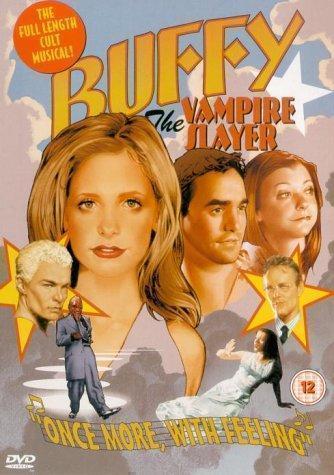 |
| But also, there were really really awesome things. |
Sunday, March 18, 2012
The Religious "Community"
Anyone
who is even casually acquainted with me in meat-life will be aware of
two facts: (1) Community returned this week, and (2) I was very, very, very, very happy
about this.
Community
is straight-up my favorite show
on TV. Its midseason disappearance from NBC's schedule was
devastating to me, and the announcement of its return had me capslock
keymashing all over the internet. I celebrated Thursday's episode
with friends and champagne: it was glorious and beautiful, and it's
not really an exaggeration to say that this show is a religious
experience for me. Here's why.
1.
The community of television
I
tend to be fairly generous with my definition of “the religious”.
Like Tillich, I think religion is an orientation toward ultimate
concern; like Barthes, I believe we are surrounded by images that
signify ideologies – and if popular culture reveals and reflects a
society's most deeply held values, then it's not a huge leap to argue
that pop culture can be a locus of religious experience. (Tom
Beaudoin's Virtual
Faith makes this argument
very nicely.)
Although
TV
ownership in the US is apparently declining, television is still
the most ubiquitous form of mass media in this country (of that 3.3%
of TV-less households, it's a fairly solid bet that many of them
still watch shows online). As such, it is the most unifying artifact
of American popular culture, and thus television as a whole could be
considered a site of religious meaning. Even for a small cult show
like Community,
several million viewers
participate in the weekly ritual of watching it – a shared
experience that nonetheless resonates on a personal level for each
individual, much like a religious service.
2.
The community of the individual
Some
people have accused the Community
ensemble
of being uniformly terrible human beings who evince no character
growth and are unlikeable and completely unrelatable. I will not link
to the people saying these things, because they are erroneous,
incorrect, inaccurate, misguided, mistaken wrong-mongers who are very
very wrong.
I see myself in Jeff: his walls of sarcasm and cynicism that try but
fail to hide the true depths of his emotional responses.
I see myself in Britta: her enthusiasm for political causes and her
morality that stems from a heart in the right place but is often
ill-thought-out or hypocritical in practice.
I see myself in Abed: his profound love of pop culture, his social
discomfort, his use of pop culture to understand those around him.
I see myself in Shirley: her deep Christian faith and her struggle to
overcome her personal failings to live a really loving Christian
life.
I see myself in Annie: her neurotic perfectionism and intense fear of
failure.
I see myself in Troy: his goofy sense of humor, his deep bromance
with his BFF, his quest for a place and purpose in the world.
I see myself in Pierce: his desperate desire for acceptance and
inclusion, insecurities often masked by acting like an almighty
asshole.
I really, really love these characters. Each one of them speaks to a
different part of my own personality, often in ways that illuminate
my flaws and weaknesses. They are complicated, imperfect human
beings, but they love each other and I love them. They embody the
complex, messy reality of being human – of being simultaneously
wonderful and terrible, capable of beautiful things and horrific
things, worthy of love and of hate.
3.
The community of friends
It's
called Community because
that's what it's ultimately about. This is a show about a group of
people who are thrown together in a situation that's for none of them
ideal, and who learn to make the best of it. The interpersonal
dynamics at play in this show are special because they are bold and
because they speak a truth that is rarely spoken in television.
Compare
the show Friends. That
was also a show about a group of friends, and it was often a sweet
show with a good heart, but all the friends came from the same social
location: straight, white, young, of a certain socioeconomic bracket.
Community dares to
portray a very diverse group of people who find common ground without
erasing their differences. The relationship between the Self and the
Other must involve both the unity of commonality and the space of
respecting difference. Friendship is the experience of navigating
this Scylla-and-Charybdis – learning to find common ground in your
shared humanity while celebrating and benefiting from each other's
difference – and Community portrays
this wonderful, difficult process better than any other show I've
ever seen.
4.
The heart of Community
Community
is a dizzyingly inventive show,
playing with pop-culture history in endlessly fun and creative ways,
but it is still a television show, and as such it follows a certain
formula. The characters love each other; they learn lessons about the
value of friendship; they make missteps and hurt each other, but they
ultimately make the right choices and warm our hearts. Like religious
truth, Community's
heart is both inexhaustibly profound and completely obvious.
So
very many religious and philosophical traditions hinge on the Golden
Rule. Jesus himself said that everything else was pretty much
window-dressing. Love your neighbor as yourself: it really couldn't
be simpler. And yet we have to be taught it, over and over again, in
different ways and by different people, and we still don't do it.
It's childishly simple, but it's also really difficult.
In
the same way, Community is
a television show. More specifically than that, it's a half-hour
network sitcom. It plays by established rules and conveys a simple,
feel-good message. At the same time, though, it takes such delight in
exploring the limits of those established rules and finding new and
awesome ways to express that simple message.
Community
is
a show about love, it's a show written from a place of love, and I
believe it's a manifestation of God's love in the world. I leave you
with the moment I first knew this show was something really special
and a nugget of pure wisdom: cabeza
es nieve, cerveza es bueno.
Friday, December 2, 2011
Bad Science, Bad Hermeneutics
In
light of Joel's
excellent piece on Dawkins et al., and Echidne's
smackdown of the latest pseudoscience from professional troll
Sacha Simon Baron-Cohen, I think it's time for me to
rearticulate my problems with Enlightenment-style rationality.
Don't
think I'm in any way an enemy of reason. I adore logic, reason,
systematics, scientific principles (there's a reason my brother calls
me The
Spock). Unfortunately, the Enlightenment pursuit of pure reason,
though I'm sure thoroughly noble in intent, gave rise to the most
pernicious evil to plague modernist thought: the myth of objectivity.
For
example, my own interest in debunking bad science is intricately
entwined with my feminism, anti-racism, etc. I freely admit that it's
agenda-driven, because it stems from my most basic, deeply-held
convictions about the world (the personhood, equality, dignity, and
rights of every human individual).
Every
act of the intellect, whether it's science or a reading of the Bible,
has as its foundations certain assumptions about the world. It
couldn't exist otherwise. Any claim to a value-free, unbiased,
objective study of anything is at worst totally mendacious and at
best coming from a place of unexamined privilege. Hell, if there's
one incontrovertible sign of unexamined privilege, it's a belief in
your own objectivity.
Think
about some of the things that have been considered Totally Objective
Reason-Based Agenda-Free Science:
- That women's delicate ladybrains were inherently inferior to men's
- That black people were biologically inferior to white people
- That trans people were only really trans if they conformed to very rigid gender roles – otherwise they were just confused
And many, many more,
many of which still sadly have a grip on the fevered imaginations of
certain privilege-denying populations, and all of which have been
thoroughly debunked by rigorous deconstruction of their agendas.
This is the true value
of postmodernism: that it debunks the myth of objectivity by
acknowledging that the observer is
also an actor.
Meaning, we say in postmodern lit theory, is constructed at the
moment of interaction between reader and text; which means that any
interpretation is as much a product of the reader as of the text, and
any honest reading has to acknowledge what it is the reader is
bringing to the table. There's no such thing as “just what's there”
– there's only what you see.
The
same is absolutely true of scientific inquiry. I'm not saying the
methods of rationality aren't sound – I'm saying that, as commonly
applied, they don't go far enough. Even as you turn that laser-like
judgment and doubt onto the subject under critical inquiry, turn it
also onto yourself.
Tuesday, November 8, 2011
Happily Ever After
My grandmother likes to
say that, if she ruled the world, she would outlaw ending fairy tales
with “...and they got married and lived happily ever after.”
Instead, they would end: “... and they got married, and some days
were better and some days were worse, but they both worked jolly hard
at it and forged a loving mutual partnership, and I guess you could
call that happiness.”
Of course, if I were
writing fairy tales, they wouldn't involve marriage at all. The
happily-ever-after would be something along the lines of “...and
that lonely little girl grew up to have multiple kickass friends on
several continents, and they were most excellent people.”
Then again, maybe
calling that a happily-ever-after is a little premature. As Herodotus
put it, “call no one happy until ey dies.” So, natch, I've been
thinking: what is happy?
Since
I started grad school, I'm happier than I've ever been. I love
California, I love my studies, and I love my new friends (I TOTALLY
HAVE FRIENDS HERE, YOU GUYS). Never before have I so quickly and
easily found a place where I slotted in, made friends, felt at home:
in both high school and undergrad, it wasn't until my second year
that I really got comfortable, whereas here I felt totally settled by
my second month.
That
doesn't mean some days aren't difficult (though so far I've only had
one really awful day, and most of that was fury at a
profoundly horrible decision on the part of the UK government),
and it certainly doesn't mean I'm in a perpetual state of bliss. I'm
still human and this is still a human situation.
The
thing about happiness – or this thing that I'm calling happiness
while I'm still alive, at any rate – is that it necessarily carries
with it an undercurrent of sadness. I've noted this at other times
when I would characterize my general state as happy (final year of
high school, spring through fall of my second and third years of
undergrad, my summer 2010 travels around Europe with the
then-girlfriend): true happiness is, for me, always
accompanied by an awareness that this too shall pass.
Maybe
it's different if you're a real, settled grown-up with, like, a
career and stuff, but as long as you're planning your life in
increments of two or three years, every period of joy you find also
brings you the pain of knowing that it will be over soon. I'm in a
two-year master's degree program; even next year won't be the same,
as some of my friends will have graduated, and the year after that –
who knows?
And
that's the looming shadow of mortality. Any day, any minute, I or one
(or all; oh hai, San Andreas fault) of my friends could snuff it, and
it'd be sayonara to this precarious happiness. Any account of the
good life has to encompass the tragic transience of human existence;
and that knowledge, I think, is what transforms mere surface
happiness into the deep, sorrow-tinged contentment that is joy.
This
too shall pass: it's a source of sadness, and it's a clarion call to
carpe diem, to make
the most of this fleeting delight for as long as you're graced with
its presence.
Thursday, August 11, 2011
Love The Haters
You know what's really, really hard? Loving your enemies.
It's such a pat phrase that I don't often really think about what it means. Circumstances don't currently compel me to spend time with people I don't like, so I find myself dismissing this commandment: “eh, don't really have any enemies.”
If there's one thing I've learned from this whole ugly riots mess, it's that I absolutely do. And I've been able to codify something about myself that makes me feel a little weird:
I have a lot more sympathy for people whose actions repel me than for people whose words repel me.
I condemn the rioters' actions while seeking to understand their point of view. Good job me. Top marks on loving your enemy right there. But the people who are saying horrible things about the rioters, impugning their humanity and calling for mass murder (encasing them in concrete and unleashing polar bears on them are just two of the suggestions I've seen on Facebook)? I condemn them without even trying to understand their point of view.
Maybe it's because my hate-spewing Facebook-friends are mostly a lot like myself in terms of background and socioeconomic circumstances – heck, a few years ago (pre-SJ, pre-Christianity) I might well have been saying the same things myself – and the reason I'm lashing out at them is because I understand them too well, and I want to distance myself from the things I could all too easily see in myself.
So what does it mean to love your enemies?
Let's start with enemies. That is like a ridic melodramatic word in today's parlance. Obviously it means the people you find it hardest to love. For me personally, I think ideological opponents is probably a better term. The fantastic Christian Humanist blog recently linked this super-interesting article, which argues that
“...as a culture, liberalism has become insular and narrow-minded. It lacks the capacity for the generous appreciation of other points of view needed in a pluralistic society. That capacity is more likely to be found today among conservatives, particularly religious conservatives.”
That's a helluva thing. Now, I don't really consider myself a liberal – liberalism's a little far right for my tastes – but it's certainly closer to me than conservatism, and (without wanting to get into discussion of whether it's a valid or defensible statement) this bold, extremely questionable assertion has got me examining my beliefs more critically than ever before.
I have an unfortunate tendency to pride myself on my “generous appreciation of other points of view”. I'm constantly checking my privilege, trying to be super-duper politically correct, accounting for the multifarious effects of background and circumstance and identity politics. The only people whose point of view I don't try to understand?
Right-wingers. People who don't seem to care about social and economic justice. People whose politics are in direct opposition to mine.
The thing is, in my actual interpersonal relationships I am okay at this. I have friends who are conservatives. I dearly love certain people who are racist, sexist, heterosexist, etc. When I was a small child living far away from my biological grandparents, an older couple living in our neighborhood were surrogate grandparents to me and my brothers, and I vividly remember the shock of learning, years later, that they believed God made black people and white people separate and we should stay that way. It was the first time in my life I confronted head-on the truth that sometimes people you care about have really objectionable views, and it's a lesson I've had to keep on learning.
And yet it's easy to make exceptions and justifications for people you already know and love. When the people with objectionable views are mere words on a screen, it seems logical and right to put principles above people.
To really live a Christian life, though, means always putting the people above the principle. (Side note: one of the reasons I adore children's fantasy classic Silver on the Tree is because of its take on this issue.) It is possible to reject someone's objectionable views but still understand and love em. It has to be possible. That's what God does: God understands all of us completely, and God loves all of us completely, and God absolutely rejects injustice and hatred.
How does God do it? I don't friggin' know. That's why God's God, and I'm not. I do know that it's my duty as a human being to try as hard as I possibly can, and that as long as I live it's going to be really, really hard.
Tuesday, July 26, 2011
God of Speculative Fiction
Christian fundamentalists, militant atheists, and some of the more irresponsible corners of the media like to paint Religion and Science as two discrete forces in a binary opposition. To scientists, this narrative asserts, faith is a mendacious force wilfully blinding people to the truths of scientific endeavor and the methods of rationality; while religious believers bury their hands in the sand of the like-minded community or seek to discredit the facts that would falsify their faith or at least render it unnecessary.
Needless to say, I despise binary oppositions with the white-hot hatred of a thousand suns, and this one is an especial desk-denter. I'll not insult my readers' critical thinking skills by explaining how you can totes believe in God and evolution at the same time!!eleventy (though if you've stumbled upon this blog, say in a Google search for “rob bell gay” [spoiler: he's not!], consider fine-tuning your reading comprehension skills before commenting, ta very much).
Christian writer Alister McGrath observes that university Christian groups are often populated primarily by science students, and my own experience bears this out. I think there's an argument to be made for the intellectual humility of scientists, as opposed to liberal arts students like myself who arrive at university convinced that, if we don't already know everything worth knowing, we certainly will after three/four/ten years of studying Latin/gender studies/ancient Sumerian. McGrath's explanation, though, is that “scientists are used to talking and thinking about reality in terms of models, in terms of partial and conceivable representations of reality, and thus have little difficulty in handling the same tools when speaking and thinking about God”.
The same, I believe, applies to speculative fiction fans. Whereas the practice of scientific inquiry endows a way of conceiving reality that can be transferred to thinking about meta-reality, sci-fi and fantasy provide images that we fanpeople can use as our models for conceiving God. (And, before you ask, I have indeed uttered the sentence, “Dammit, Jim, I'm a speculative fiction fan, not a scientist!”)
It's not just that fantasy's Big Three – the writers whose worlds even haters of fantasy are familiar with: Tolkien, Lewis, and Rowling – are all Christians whose culturally-ubiquitous works incorporate and recreate aspects of Christian mythology. It's that speculative fiction has a unique power to tap into our deepest longings, magic wands and talking animals and interstellar travel and time travel and epic quests and all the things that are OMG SO FREAKING AWESOME and I WANT TO GO TO THERE: things that transcend our everyday reality and echo back to our little earth-bound time-bound physics-bound lives some small taste of eternity. If you believe in the Christian story, with its great cosmic happy-ever-after, then it makes sense that you'll experience some profound yearnings for better, cooler, more miraculous worlds than our own.
For example:
Talking about God the Holy Spirit is difficult. This is the aspect of God that lives inside every believer. (If you thought the concept of the Trinity was a head-scratcher, consider that one of the persons of the Trinity is also a zillion persons. HEAD ASPLODE.) People just don't talk about the Holy Spirit as much as they talk about God the Creator and Jesus Christ, because it is one baffling concept. Here are some of the models I use for thinking about the Holy Spirit:
All images taken from nerddom; each one something every geek has longed desperately to have; each one partial and inadequate as a model, but taken together representing something of the power and awesomeness of literally having God living inside of you.
I think the parallels between fandom and Christianity are striking. How do we respond to Middle-Earth? Some with indifference; some with hostility; some with passionate love and longing. Some people are cautiously interested in the story itself, but grow to despise it on account of the intense nerditry of the fanbase. Some people are introduced to it by their friends, while others find it on their own. Some people are switched off by the story as presented in one medium, but love it in another. Some people think it is a load of crap and can't believe grown humans are wasting their time on a pointless fantasy world.
To those on the outside, the intensity is often alienating. But to those within the fold, all things are given through the connection that we share based on our deepest longings and the magical world that, for brief moments at a time, promises to meet and surpass them.
(Have I ever ended a prayer to God, you ask, with the words “I leave it entirely in your hands”? I HEREBY INVOKE WHATEVER IS YOUR COUNTRY'S EQUIVALENT OF THE FIFTH AMENDMENT.)
Friday, June 3, 2011
The Theology of Broadway's The Book of Mormon Part Four – Jews, Christians, Mormons, & Everyone Else: “I Believe”
Previously in Broadway's The Book of Mormon Week:
Part One – Cultural Imperialism, Suffering, & God's Comfort: “Hasa Diga Eebowai”
Part Two – Pascal's Wager, Reward/Punishment, & Mercenary Faith: “Sal Tlay Ka Siti”
Part Three – Cultural Relativism, Interfaith Relations, & New Religions: “Making Things Up Again”
Expect mild spoilers and offensive content. Detailed disclaimers can be found in the introduction.
This is it: the big Act Two showstopper, the emotional high-watermark, the great thundering anthemic number that will live on in sheet-music form long after posterity has dismissed the rest of the show as pedestrian or dated or something. “I Believe” is definitely the standout track of Broadway's The Book of Mormon as far as I'm concerned – both because it's a stonking tune and because it encapsulates the show's philosophy.
Kevin, after despairing of his difficult mission and confronting his demons in a very dramatic fashion, has an epiphany: he will stand his ground, walk into the valley of the shadow of death, and own his faith with all his heart. It's powerful, affirming, and very frickin' funny.
I believe that the Lord God created the universe,
I believe that he sent his only Son to die for my sins,
And I believe that ancient Jews built boats and sailed to America!
This initial juxtaposition of traditional articles of Christian faith with Mormon elements, which sound kind of goofy to a non-Mormon, confronts the religious viewer with the question: why that faith? Why do you privilege one specific holy text, or one particular reading of your holy text, or one definition of God over all others? Are the Mormon-only beliefs (that God lives on a planet called Kolob; that the Garden of Eden was in Jackson County, Missouri) really any sillier than the mainstream Jewish and Christian beliefs that Mormons also espouse?
The trouble with the relativist perspective is that it's not clear where, if anywhere, to draw the line. Are all religions equally true, or at least equally acceptable? What about a cult? What about a faith invented and adhered to by only one person? Most of us would agree that a religion that causes people harm is not okay, but who decides what constitutes harm? John Shore's definition of harm caused by religion would differ from Christopher Hitchens'.
Broadway's The Book of Mormon doesn't really address this issue. As a show written by atheists about religious exclusivists, it fails to delve into the deeper questions of truth and meaning that might be asked by a post-modern or relativist believer. There is, I think, an ethical difference between presenting as fact stuff you believe to be true (Jesus' resurrection) and presenting as fact stuff you believe to be false (Joseph Smith's magical AIDS frog), even if the underlying lessons are good ones; but you wouldn't know it from this show.
As a teenager, my motto, which I though was incredibly clever and witty (okay, I still think it's pretty funny), was “all generalizations are bullshit”. Little did I know, this is a highly deconstructionist statement. The relativist idea that “there is no absolute truth” is itself an absolute statement, and therefore must be false under its own premise. It's a Zeno's paradox of meaning. Zeno's paradox is all very well, but when you want to get somewhere you take a step; similarly, when you want to communicate you accept that meaning exists. If you believe in God, at some stage you pick a stance on the issue of truth.
I believe that God has a plan for all of us,
I believe that plan involves me getting my own planet,
And I believe that the current president of the church, Thomas Monson, speaks directly to God!
Kevin says, “I can't have even one shred of doubt”, but many thinkers believe doubt is a key component of faith. In Robert Anton Wilson's Schrödinger's Cat trilogy, two faith groups are asked , “What is the opposite of faith?” One group replies, “Doubt”; the other, “Certainty.” No less godly a figure than Mother Teresa was tormented by doubts throughout a life of service and humanitarianism.
Is it even possible to will yourself into faith? One of the major criticisms of Pascal's Wager is that you cannot force yourself to believe something. (I think one could argue this point, but I won't go into it just now.) But this song is not so much about Kevin willing himself into faith; it's more about accepting and claiming the upbringing and culture that will always be a part of him: “I am a Mormon, and, by gosh! A Mormon just believes.” To him, “you cannot just believe partway – you have to believe in it all”. He has always believed in Mormonism as a synthesized whole, not as an extra bit tacked on to Christianity, and those of us interested in interfaith dialog would do well to remember that.
I've talked before about atheist smugness; Broadway's The Book of Mormon mostly avoids this by being an exuberant celebration of faith that doesn't shy away from difficult questions. Trey Parker calls it “an atheist’s love letter to religion.” After all, from the rationalist-atheist perspective he and Matt Stone espouse, irrational beliefs sustain us all, whether it's faith in God, belief in human goodness and love, or simply hope of any kind.
* * *
That brings us to the end of Broadway's The Book of Mormon Week here at Gay Christian Geek! Thanks for reading; I hope you've enjoyed it (and are not as heartily sick of these songs as I now am). Quick shout-out to Richard Beck's terrific blog Experimental Theology, which gave me the idea – if you'd like to see it done properly, take a peek at his superb series on The Theology of Calvin & Hobbes.
Thursday, June 2, 2011
The Theology of Broadway's The Book of Mormon Part Three – Cultural Relativism, Interfaith Relations, & New Religions: “Making Things Up Again”
Previously in Broadway's The Book of Mormon Week:
Part One – Cultural Imperialism, Suffering, & God's Comfort: “Hasa Diga Eebowai”
Part Two – Pascal's Wager, Reward/Punishment, & Mercenary Faith: “Sal Tlay Ka Siti”
Expect mild spoilers and offensive content. Detailed disclaimers can be found in the introduction.
It's interesting to me that the decline of faith in the west hasn't removed the cultural impact of religious identity. I think it's particularly noticeable among Jews: my cousins near London host an enormous Passover seder and a Rosh Hashana meal every year, and are very active in their local synagogue, and not a one of them believes in God. Atheist Muslim friends, atheist Catholic friends, even atheist Protestant friends have spoken to me about how their family's religious background shaped their experiences of growing up and their characters today.
Recently I had to fill out a form that asked me to state my denomination of Christianity. I thought long and hard about which subgroup I identify with most, but in the end I couldn't narrow it down any further than “Protestant”. I'm very sure, however, that I'm Protestant; I can't even imagine myself being Catholic.
My faith is Protestant with a strong bulwark of Jewishness; my upbringing was Protestant with a strong bulwark of Jewishness. From the values and ideas instilled in my formative years to my present-day beliefs is a straight line: how can I help but be a cultural relativist?
And so I hesitate to call any religion “made-up”. People, if they have any belief, more often than not have the beliefs they were brought up with, and it seems too arbitrary for one religion to be correct and everyone born into a different faith tradition to be at an instant disadvantage with respect to the truth. But religions rarely take well to the new religions that spring up to usurp them. It's at the heart of the Jewish resentment of Christianity, the Christian fear and hatred of Islam, and the tendency of pretty much everyone to make fun of Mormons.
You're making things up again, Arnold:
you're taking the Holy Word and adding fiction.
At this point of the show, ill-informed Arnold is confronted by the villagers with some awkward questions. Lacking the Biblical knowledge or theological understanding to argue his points, he simply invents stories about God curing Joseph Smith's AIDS and declaring female genital mutilation an abomination. Of course, the punchline is that, to a couple billion people, Mormonism itself is “recklessly warping the words of Jesus”. Is that fair? Is it true that “a lie is a lie” – no mitigating circumstances considered?
I'm making things up again, kinda,
but this time it's helping a dozen people.
At the heart of the show lies the question, “Is making stuff up really so bad if it helps people?” I'll return to this question from an ethical perspective tomorrow, but for the moment let's consider the theological implications.
From an exclusivist religious perspective (of any faith), clearly the answer is “yes”. If you believe you have a monopoly on the truth, then you likely feel a duty to share it with others and save them from their false religions. (This is why, as many problems as I have with them, I find I can't judge evangelicals too harshly; they truly believe that they're doing the right thing.)
From the rationalist-atheist perspective, it's one fairytale or another. If you don't believe in God, what's the difference between zombie Jesus and a magical AIDS frog? Either you think it's reprehensible to tell anyone stories of the supernatural and divine, or you say (along with the show's creators) “whatever works”.
To the post-modern believer, however, this question sparks a whole host of further questions. Given the subjectivity of religious experience and the profound influence of cultural background, what can be legitimately considered “made-up”? To a Jew, Christianity is made-up; to a Christian, Mormonism is made up; to a Mormon, Arnold's new religion is made-up – who's right? What relation do facts bear to truth? Any lover of fiction understands that something can be made-up but still true (read Philip Pullman's The Good Man Jesus and the Scoundrel Christ for a very interesting take on this, in relation specifically to Christianity).
Without venturing too far into the big spoiler territory, the show concludes (along with many, both religious and not) that, since we can't know what happens after death, we shouldn't dwell on it, but concentrate on living. The specifics of your beliefs aren't important, provided that you try to live a good life, help others, and improve this world in whatever ways you can.
It's hardly a revolutionary stance. But it might just be the best way of living in a world of many faiths and acknowledged cultural relativism.
Tomorrow: The Theology of Broadway's The Book of Mormon Part Four – Jews, Christians, Mormons, & Everyone Else: “I Believe”
Wednesday, June 1, 2011
The Theology of Broadway's The Book of Mormon Part Two – Pascal's Wager, Reward/Punishment, & Mercenary Faith: “Sal Tlay Ka Siti”
Previously in Broadway's The Book of Mormon Week:
Part One – Cultural Imperialism, Suffering, & God's Comfort: “Hasa Diga Eebowai”
Expect mild spoilers and offensive content. Detailed disclaimers can be found in the introduction.
While I was occupied with learning to make friends, preparing for the onset of puberty, and terrorizing the other little girls of Nairobi's international schools with the help of my never-defeated under-elevens netball team, my mother was confronting an adult's demons. After losing a lot of sleep over the abject poverty on our doorstep, she quit her job and devoted several years to the founding and running of a charity to feed and educate kids living on the streets.
One day, some of these kids started asking Mother about life in her country. “Does everyone in your country have a place to live?”
“Almost everyone. The government tries to provide housing for everyone,” she explained.
“Does everyone in your country have enough to eat?”
“Almost everyone. If they can't work, the government gives them money.”
“Does everyone in your country go to school?”
“Almost everyone. The government provides free schooling for everyone.”
“So everyone in your country is happy?”
I'm reminded of this story by “Sal Tlay Ka Siti”, in which a young Ugandan woman sings of her desire to go to the promised land that Kevin and Arnold described for her. With a devastating combination of humor and pathos, she conflates the Salt Lake City of the boys' description with the Paradise of her mother's stories:
I can't imagine what it must be like,
this perfect happy place:
I'll bet the goat meat there is plentiful
and they have vitamin injections by the case.
The warlords there are friendly:
they help you cross the street,
and there's a Red Cross on every corner
with all the flour you can eat.
Her new-found faith in “a land where evil doesn't exist” is predicated on the realization that “if I want to get there I just have to follow that white boy”; before long, she asks to be baptized. You could call it a mercenary faith: faith motivated by the prospect of gain.
Take, for example, Pascal's Wager. You'll recall its argument that choosing to believe in God is rational because, if God doesn't exist and you believe, you have nothing to lose; but if God does exist and you don't believe, you lose everything. The problem I've always had with this idea is its intellectual dishonesty. In the same vein, people have argued that an ethics born of genuine concern for others' wellbeing is somehow a nobler, more ethical ethics than one that relies on the reward of eternal life.
However, before sneering at Pascal's Wager and mercenary faith as intellectually dishonest, we have to take into account two important theories: the just-world hypothesis and Maslow's hierarchy of needs.
The just-world hypothesis suggests that humans have a psychological need for an appropriate reward/punishment system. I think we can all agree that we have this craving for justice, and that it's not satisfied in this life; that's why we have Law & Order: SVU, the idea of karma, and the concept of God's ultimate justice. (It's also, sad to say, why we have victim-blaming and a champion rationalization mechanism.)
Maslow's hierarchy of needs is a pyramid categorizing and ranking human needs: from physiological needs, through safety needs, love/belonging needs, and esteem needs, to self-actualization at the top. The intricacies of this ranking are dubious, but it's fair to say that someone who has neither food nor a piano is not going to prioritize finding a piano. Which is to say: is worrying about the intellectual honesty of our faith not the privilege of the breaded classes?
Yesterday, I wrote that it's easy to say that souls are what matters when your body is comfortable, healthy, and safe. Similarly, it's all very well to debate the ethics of mercenary faith when the goat meat is plentiful. When you lay the innate human yearning for fairness over the lower rungs of Maslow's pyramid, belief in something better is often the result.
“Sal Tlay Ka Siti” asks the question of all missionaries: is your success perhaps less to do with the Lord's message and more to do with the wealth, health, and power you clearly enjoy?
It asks the question of sneering intellectuals: how can you in good conscience tell people they need to have “noble” reasons for their faith?
And it asks the question of everyone in the west: would you like a little perspective with those first-world problems?
Sal Tlay Ka Siti:
the most perfect place on earth,
where flies don't bite your eyeballs
and human life has worth...
Tomorrow: The Theology of Broadway's The Book of Mormon Part Three – Cultural Relativism, Interfaith Relations, & New Religions: “Making Things Up Again”
Tuesday, May 31, 2011
The Theology of Broadway's The Book of Mormon Part One – Cultural Imperialism, Suffering, & God's Comfort: “Hasa Diga Eebowai”
Part of Broadway's The Book of Mormon Week. Expect mild spoilers and offensive content. Detailed disclaimers can be found in the introduction.
When I lived in London, I attended a conservative evangelical church for two years. I am, as you might have gathered, neither conservative nor evangelical. Evangelicals are extremely keen on sharing their faith; in fact, they talk about little else. Nearly every week we were encouraged to bring a non-Christian friend to some church event (and, knowing how most non-Christians react to being invited to a church event, I can only admire such perseverance); and nearly every week we were asked to pray for “our mission partners” in South Africa or China or France.
The whole concept of mission is very problematic for liberal or left-leaning Christians. On the one hand, mission workers did and do bring much-needed education, infrastructure, and supplies to destitute areas. However, mission's intertwining with imperialism, both economic/territorial and cultural, can't be ignored, and Christian mission can certainly be held responsible for many of Africa's problems today.
The plot of Broadway's The Book of Mormon sees two young Mormon men – all-American golden boy Kevin and nerdy comic-relief figure Arnold – sent on their mission to a village in Uganda. A lot of immediate humor is mined from the simple incongruity of the squeaky-clean, hopelessly naïve Mormon boys transplanted to a little war-ravaged African village. Refreshingly, the jokes are mostly skewed, not against the PRIMITIVE AND WACKY NATIVES!, but against Kevin and Arnold, due to the ways Africa defies their expectations (which, like mine when I moved to East Africa at the age of seven, are based almost exclusively on The Lion King).
“Hasa Diga Eebowai” is the song with which the Ugandans greet them on their arrival. It's a direct rebuttal of Disney's “Hakuna Matata”*: “There's war, poverty, famine, but having a saying makes it all seem better!” Kevin tries to tell the villagers that they mustn't say “hasa diga Eebowai” (=“fuck you, God”), because “things aren't always as bad as they seem.” Naturally, he has no idea what he's talking about.
*Though, to be fair, “hakuna matata” is in fact a common saying in East Africa.
God's presence might comfort Kevin in times of trouble, but the experience of God is subjective. When your “times of trouble” constitute the plane being crowded and the bus being late, it's perhaps a little presumptuous to tell a poverty-stricken war-torn AIDS-plagued community that your God will make them feel better.
Too often, rich Westerners like to ascribe greater spirituality to the poor, as if people living in poverty are unilaterally pure and Godly. I call it “Gap Yah-ism”: to salve our rich-person consciences, we ascribe to people in poverty other assets than material ones – “a sense of enduring hope, as if to say, 'You know, despite our differences you and I are one, we are kindred spirits'...” – trying to convince ourselves that economic injustice isn't so bad because material poverty goes hand in hand with spiritual wealth. Of course, it's true that God does comfort many people who are suffering, and it's true that, per liberation theology, the poor have spiritually privileged voices; but the danger arises when people think that this means poverty and suffering are not so bad after all.
Some Christian exclusivists believe that alleviating the troubles of this life is not as important as converting unbelievers. This lack of concern for social and economic justice was one of the major reasons I left my evangelical church in the heart of London's financial district: it's easy to say that souls are what matters when your body is comfortable, healthy, and safe. In reality, millions of people are suffering, and the breathtaking arrogance of telling people their suffering doesn't matter is exactly what this song is skewering.
“When God fucks you in the butt
Fuck God right back in his cunt.”
To a Westerner, it sounds appalling – I imagine that the vast majority of even secular Westerners wouldn't be entirely comfortable saying “Fuck you, God, in the ass, mouth, and cunt” – but that's the brilliance of the song: if we're so inured to the suffering of our fellow humans that “Fuck you, God” is more shocking than “Eighty per cent of us have AIDS”, doesn't that indicate our profound moral bankruptcy? If Christians – whose entire way of life is supposed to be based on the Golden Rule – care so little for suffering people, isn't it reasonable that suffering people should in turn reject Christianity?
“When the world is getting you down
There's nobody else to blame
Raise your middle finger to the sky
And curse his rotten name.”
There certainly is Biblical precedent for calling out God for heaping suffering on your head. Check out Psalm 88:
“O Lord, why do you cast my soul away?
Why do you hide your face from me?
...I suffer your terrors; I am helpless.
Your wrath has swept over me;
your dreadful assaults destroy me.”
Psalm 88 doesn't end with words of faith and hope in God. It is a litany of despair and pain, and its final line is “darkness has become my only companion.” Contrary to many people's insistence, the Bible doesn't gloss over suffering or offer easy answers (read Job or Ecclesiastes if you want a real head-scratcher). Any honest theology must admit that sometimes God seems at best absent, at worst malevolent, and acknowledge the legitimacy of every response to this fact.
“If you don't like what we say
Try living here a couple days.
Watch all your friends and family die
Hasa diga Eebowai!”
Tomorrow: The Theology of Broadway's The Book of Mormon Part Two – Pascal's Wager, Reward/Punishment, & Mercenary Faith: “Sal Tlay Ka Siti”
Monday, May 30, 2011
The Theology of Broadway's The Book of Mormon: Introduction
The latest fixture of my iPod is the original cast recording of new Broadway musical The Book of Mormon. Obviously, I haven't seen it, but I've been enjoying the songs a lot, and that's why this week is Broadway's The Book of Mormon Week here at Gay Christian Geek!
I won't be talking about the show as a musical, because frankly there's nothing much to say. Lyrically and musically, it's about as complicated as A Very Potter Musical, and shares with that show an infectious pop sensibility that's far from Sondheim.
I will be talking about the show as a vehicle for its creators' philosophy of religion. Matt Stone and Trey Parker – best known for South Park, which is a little too preachy and a little too reliant on gross-out humor for my taste (though I admit that in small doses, e.g. highlight clips on YouTube, it can be absolutely hilarious) – have never shied away from mocking any faith group, even when legal threats were involved. Their fascination with Mormonism in particular is documented in a South Park episode and in the delightful, underrated Orgazmo. What do they have to say about it? What tone do they strike, and what points, valid or otherwise, do they make about organized religion?
I'll do my best to discuss all of this without getting too spoiler-y, for those of you holding out for the West End transfer (I admire your resilience, Michael!), but mild spoilers will be unavoidable. And, to give you fair warning, some of this stuff is incredibly offensive. If you have a problem with blasphemy, cuss words, or jokes lightyears beyond the boundaries of good taste, then this series of posts is probably not for you, and this musical is definitely not for you.
Disclaimers out the way, it's time to gird the loins of your mind (oh, how I love that phrase) and gear up for some serious overthinking. Check back tomorrow for Part One of Broadway's The Book of Mormon Week at Gay Christian Geek!
Subscribe to:
Posts (Atom)