Sunday, February 10, 2013

Theologies of Uncertainty

This past week, I began the final semester of my master's degree.

I can't believe how quickly it's gone by. Seems like only the other day I was sleepless with excitement, the night before moving to California to start my grad-school career. This little master's degree has changed me in some huge ways – I suppose the big ones are the gender transition and the acquisition of something resembling a life ambition – but it's also interesting for me to reflect on how my theology has changed.

The biggest difference is my wholesale embrace of deconstruction, doubt, (de)negation, paradox, and contradiction as crucial aspects of my theology. For fun the other day, I tried writing out a creed that expressed the core of my beliefs as succinctly and honestly as possible, and this is what I came up with:

I believe in(to):
         God is (not)
         Jesus is (not) God
        We are (not) God
Be excellent to each other and party on, dudes.

Pretentious? Sure. I'm a humanities grad student. But it's also heartfelt.

I made this brief creed because I go to an Episcopal church, and every Sunday I recite the Nicene Creed with my fellow worshipers. I like it when my studies and my church complement each other. Studying Classics in undergrad, I needed a church where the sermons were 45-minute exegeses of the scriptural text. Now that I study theology formally, I need a church where the sermon is not the point at all.

I am very happy with my church here. I've begun to develop a theology of the Eucharist based on the weekly Eucharist (unlike my church in London, which had a neverly Eucharist). I love sitting in the pews alongside some of my closest friends, sharing commentary on the service via whispers, texts, and notes written on the bulletin (which I consider my week's best constructive theological work). I love the contrast between my rad-lefty school and my christologically orthodox church.

Maybe this is naivety born of my two years at an evangelical church, but I've been genuinely surprised at the lack of christological orthodoxy among self-described Christians. Before committing to Christianity, I spent a couple of years exploring my Jewish heritage. The thing that drew me to Christianity specifically was, y'know, Jesus Christ. I don't talk about this much, but I have a very high christology. I think Jesus is God. That is why I am a Christian. It's weird to me that you would be a Christian if you don't think that. I mean, believing in the God of Israel, or the Universal Spirit, or the Creator, and thinking Jesus is a top bloke but not divine/Messiah/only-begotten Son of God? That's a great belief and I'd never tell anyone they're wrong for having it, but why is that Christianity? If I believed that, I'd call myself Jewish.

I guess I still have a lot to learn. Good thing I'll be going on to doctoral studies this fall.

Thursday, January 31, 2013

Wishes For My Godchild

I keep calling him "him." I keep talking to him in the ways that people address male-assigned children and tend not to address female-assigned children: "Little buddy." "Little guy."

I should know better.

I know how much it hurts – how deeply it gets interiorized, how desperately hard it is to root out – to have it constantly reinforced that you're A Boy or A Girl based on what your body looks like. When there isn't strict behavioral policing or immutable gender roles; when you're taught that boys and girls are equals, that there's nothing one can do that the other can't, but also that you're either the one or the other, because biology.

When you so profoundly internalize the ubiquitous cultural lie, sex=gender, that you're terrified to even articulate your deepest desire of crossing over.

I love my godchild – more than I knew I could possibly love a tiny, smelly, messy human who doesn't do much other than sleep, eat, and then expel what he just ate out of both ends. He's seven and a half weeks old, and, according to my totallyobjectiveometer, he is the cutest miniature hominid ever made. I love my tiny person, and I don't want him to ever feel the things I have felt.

I want him to grow up knowing – not just knowing intellectually, but really gut-deep internalizing – that, just because we've been calling him "he" his whole life, that doesn't mean that's who he has to be.

I want him to grow up in a world where being he, she, they, zie, ey, or any goddamn pronoun and gender you please is fully accepted and welcomed anywhere you go.

I want him to grow up in a world where being trans* is just as easy as being cis. Hell, I want him to grow up in a world where "cis" and "trans" don't exist, because gender is finally accepted by all as the nine-dimensional hypercube it is, not the binary it's made out to be.

And probably he's not going to get any of those things, because our world is pretty shit; but God knows I love this baby, and I'm afraid for him, and no matter what, I'll be there for him/her/them/hir/em/...

Sunday, January 20, 2013

Callings


People at seminary talk a lot about “callings.” I guess it makes sense: why would you become a clergyperson if you didn't feel called to it by God?

One day, after hearing a lot of talk about people being “called” to various things, I said to a friend who, like myself, is looking to a life in academia, not ordination: “I wish I had a calling.”

My friend said thoughtfully, “I kind of feel called to academia.”

I feel like academia is a black hole,” I said. “No matter how desperately I try to escape it, its gravity just sucks me back in.”

Um... That is a calling.”

Dammit, I always thought a calling would be something nice. It sounds so friendly! Sunday school lessons about God calling Samuel in the middle of the night always made it sound pretty cool and desirable!

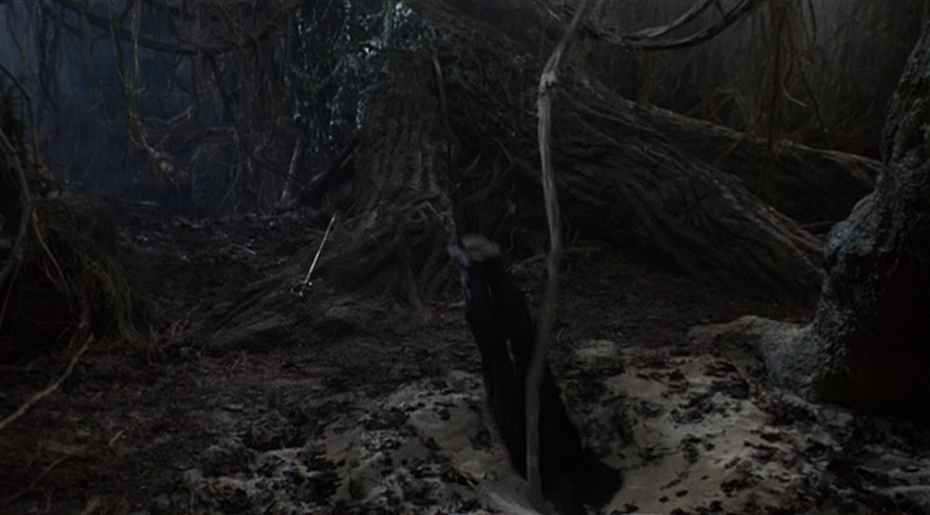
It was supposed to be this^. Instead I got this:

I've discussed callings with a number of friends since, both the future clergy and the future professors, and everyone agrees: the smiley-face God-is-my-besty model is a pile of horsefeathers. The black-hole/lightning-sand analogy is far more accurate.

Except for how there is no Westley to rescue you.
 
This rather unhappy understanding of callings does make sense of something that previously eluded me, namely Justin Tanis' idea of gender as a calling. If a calling is something that sucks you in willy-nilly, that drags you along kicking and screaming, that you can fight and struggle against but never escape – well, then my gender is definitely a calling.

I understand that in some denominations aspiring clergy are told not to seek ordination if they can possibly do anything else with their life. I feel that way about academia – if I thought I could do anything else at all, if I even had a plan B, I would certainly do that instead – and at the moment I feel that way about transition.

Maybe it gets easier farther on, when you're passing more often and you've already dealt with crap like legally changing your name. Right now, though, transition and academia both feel like my ineluctable destiny. They both feel like things that have beaten me into submission. Submission is exhausting, but resistance is both exhausting and futile.

Fine. I give in. Academia, transition, you can have me. Not my will, but yours.

Sunday, January 13, 2013

A Short Reply To Julie Burchill's Hate-Spew

I shouldn't be responding to this. [ETA: The piece in question has been pulled, thank God. Gif-filled summary here. And, wow, now I'm linking to Jezebel as an example of not intersectionality!fail.] It's vile, it's hateful, and it's a naked attempt to court controversy and grab attention (which has succeeded).

(Shame on you, Guardian. You're supposed to be a leftist alternative to hate-spewing rags like the Daily Mail and the Telegraph, not a platform for their ideas.)

I should not be linking to this article, discussing it, or wasting precious brainpower thinking about it; but, like the rest of the multiverse, I am going to do so. I've been letting a lot of things slide lately without comment or correction: this is merely the most high-profile and the most repugnant, and I am not going to stay silent about it.

Julie Burchill is awful, and needs to fucking fuck off.

How can I pick a favorite part of that horrible, horrendous, disgusting, loathsome article?

There's the bit where she calls trans women “a bunch of dicks in chicks' clothing.”

There's the bit where she asserts that “a gaggle of transsexuals telling Suzanne Moore how to write looks a lot like how I'd imagine the Black and White Minstrels telling Usain Bolt how to run would look.” (My eyes very nearly popped right out of my head at that. Jesus Christ, how dare Burchill write that sentence? How fucking dare she?)

She calls trans women “screaming mimis,” “a bunch of bed-wetters in bad wigs,” “trannies.” She justifies that last one by saying that “having recently discovered that their lot describe born women as 'Cis' – sounds like syph, cyst, cistern; all nasty stuff – they're lucky I'm not calling them shemales. Or shims.”

Y'all, she's onto us! When the Secret Cabal Of Evil Trans People invented the term “cis,” we picked it specifically because of those sound associations. It had nothing to do with FUCKING LATIN PREFIXES.

Julie Burchill, let me personally apologize for referring to you as “cis,” instead of using descriptors you'd no doubt prefer, like “normal” or “not a freak like you disgusting trannies.” In the spirit of appeasement, here are some other words that describe you accurately:
  • bigoted
  • hate-mongering
  • chauvinistic
  • revoltingly prejudiced
If I ever have the misfortune to meet you in person, I will throw up all over you.

Thursday, December 13, 2012

The Upside

It occurs to me that I complain a lot about gender- and transition-related stuff. This is because it, frankly, sucks. Getting misgendered sucks. Having to correct people on pronouns sucks. Trying so damn hard to look masculine and then being called "ma'am" at the grocery store sucks. Dysphoria sucks. Processing the changes in your relationship with your parents sucks. Being legally identified as the wrong name and gender sucks (and the process to change that double-sucks).

It sucks, it sucks, it sucks.


But hearing someone call me "he," "sir," "young man"? Makes me feel like a lottery winner, like a fairytale prince whose dreams have all come true, like the king of the fuckin' world.

Pictured: me.

Monday, December 10, 2012

On Being An Ex-Lesbian

The frequency of the identity trajectory
lesbian --> trans guy
 is well remarked upon, but that doesn't make it any less weird to experience.

I was never that big into lesbian culture. I mean, I like Tegan and Sara and alternative lifestyle haircuts, but that whole Dinah Shore, L Word, second-date u-haul, group-of-lesbian-friends-who-have-all-slept-with-each-other scene always kind of mystified me.

(Not, of course, to suggest that that scene is either prescriptive for all lesbians or somehow worthy of condemnation. I just mean that it's a big part of lesbian subculture, and that it was not for me.)

So I don't feel as though I'm leaving behind a whole community, which it seems like some people do. You know, the kind of guys who keep going to womyn's music festivals and stuff. I was never comfortable in women's spaces being around an all-female group is easier for me now that I'm not expected to be one of them, but the majority of my friends are and always have been people who are not women and the only thing I really miss about femaleness is clean public restrooms.

The fact is, though, there are things you do and say as a lesbian that have a very different resonance if you do and say them as a guy.

For example, my ships. Yelling, "Make out already!" at a movie screen when two female characters are talking seems like a pretty okay (if potentially obnoxious) thing for a lesbian to do. Insisting on some offscreen headcanon Hermione/Ginny experimentation might not make any damn sense (on Hermione's part anyway), but it's understandable in a lady-loving lady. Obsessively scrutinizing every minute aspect of your favorite lesbian relationship on TV is, contra Ryan Murphy, fair play in a community that gets so little pop-culture representation.

In a guy, though? Those behaviors are kind of creepy.

If you're a guy who spent a few years being part of that community, it's a little more complicated than that, but it's still something to be cautious about. My sexuality, which for years I've been used to considering inherently transgressive, now risks reinscribing the male gaze.

(Not that I consider myself straight now. If there's one thing I've learned about sexuality from this whole transition business, it's that "gay" and "straight" are untenable identities. Also the last person I made out with was a gay cis man, so whatever.)

It's very weird, though. I'll hear mention of something very lesbian, and instinctively think, "That's me!" and then, almost as instinctively, "No it's not."

In the end, I guess I think of being a lesbian in the same way I might think of a place I used to live: with fondness, recognition, and a degree of nostalgia, and also with the understanding that it's in my past, that I am no longer the person I was back then. I don't live in Lesbitopia anymore.

Sunday, December 2, 2012

How I Would Like To Live

I am not at all a long-term thinker – on some level, I'm surprised every time I wake up and the world is still here, trundling on as usual, and hasn't become a post-apocalyptic wasteland – but I think I have figured out the living arrangement I would like to have once I am no longer in dorms.

I would like to live with between two and five other people. We would be the most important people in each other's lives. I would not be romantically involved with any of these people; they could be involved with each other in any configuration they chose, but nobody would want or have children. We would just be a little chosen family of three to six adults who wanted to hang out with each other pretty much all the time.

I realize this is a very, very unlikely scenario, because it involves finding a group of Best Friends who also think this is a good idea. Still, in an ideal world, this is how I would like to live.

I want this to be my life, is basically what I am saying.